
CASE STORY • SYSTEMS + CREATIVE OPERATIONS
JMKAC
Quietly Expanding Team Capacity
When I interviewed with the John Michael Kohler Arts Center, I had applied for two open positions: Marketing Coordinator and Social Media Manager. During the interview, they asked which role I preferred.
My answer was simple: “Whichever one fills the biggest gap.”
That answer ended up defining my entire experience there.
I joined the Arts Center in 2021 as Marketing Coordinator, helping manage the enormous volume of work moving through a marketing department that functioned as the organization's in-house creative agency—more than 500 projects a year supporting virtually every department.
My role quickly expanded beyond keeping projects moving. When something needed to be organized, researched, sourced, designed, produced—or simply figured out—I stepped in.
Over time, that's where I became most useful: quietly expanding what the team had the capacity to accomplish.

THE CHALLENGE
Supporting virtually every department across the organization while keeping more than 500 marketing projects moving each year.


WHAT I BROUGHT
Project management, systems thinking, creative problem-solving and a willingness to step into whatever gap needed filling.

THE EVOLUTION
From managing projects to becoming a flexible team resource who helped make the work—and the way we worked—better.

THE WORK
• Project management • Workflow systems • Design • Signage • SWAG • Collateral • Vendor management • Production •
01 • CREATING ORDER AT SCALE
500+ Projects don't manage themselves.
The creative work coming out of JMKAC was exceptional. But many of the systems supporting that work had evolved over time through stop-gap solutions.
One of the first opportunities I saw was project management.
The department relied on Microsoft Access for project tracking. Feedback could live in email, Microsoft Teams, meetings or the database itself. Finding the latest revision sometimes meant searching through several places before the work could move forward.
With my director's support, I researched project-management platforms, evaluated pricing, negotiated nonprofit discounts and recommended Asana.
But changing the software was only part of the solution.
I also redesigned the department's job-numbering system. Instead of assigning projects sequentially, the new structure organized them by year, department and initiative—making current and archived work much easier to identify and locate.
Asana brought conversations, approvals, files, revisions, deadlines and project history together in one place.
Across more than 500 projects a year, small improvements to the way work moved could make a very big difference.


02 • MAKING IDEAS EASY TO SEE
Sometimes you have to build the idea.
For the Midsummer Festival of the Arts, our Marketing Director proposed improving the visitor experience with more cohesive signage and wayfinding throughout the festival grounds.
It was a strong idea. My job was to figure out how to make it happen.
I researched vendors and products, mapped sign locations, developed installation plans for the facilities team, and documented how branded tents, feather flags, information stations and directional signage could work together across the festival.
But leadership still needed to be able to picture it. So I built them a scale paper diorama.
The model showed exactly how the proposed elements would look throughout the festival before a single dollar was spent.
The project was approved.
The expanded signage and wayfinding became part of the annual festival experience.
03 • FILLING THE CREATIVE GAPS
Whatever was needed.
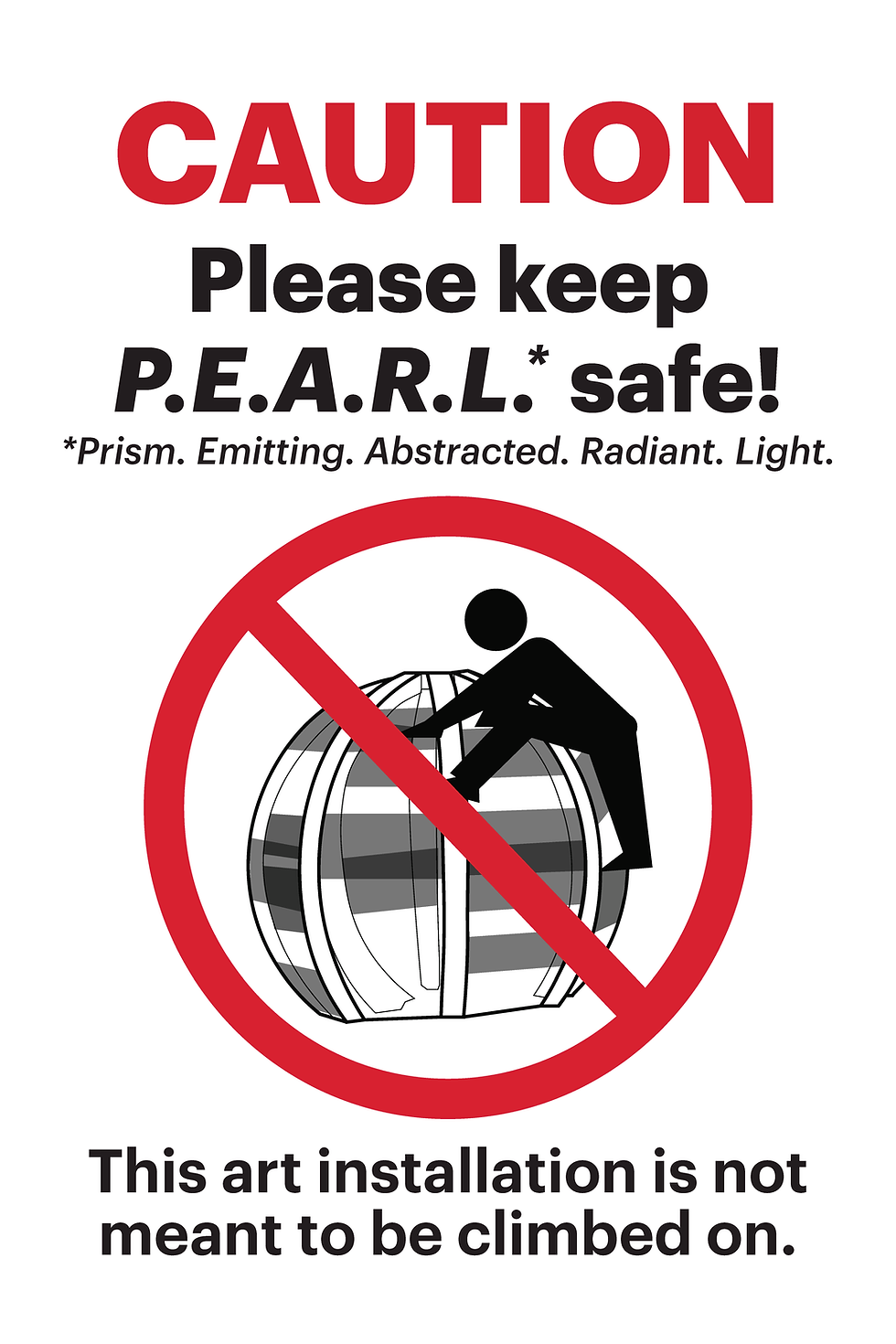
My role at JMKAC was never limited to one kind of work. With hundreds of projects moving through a small marketing team, sometimes the gap was simply that something needed to be made. So I made it.
Visitor guides. Advertising. Event graphics. Donor and volunteer materials. Digital assets. SWAG. Apparel. Signage. Collateral. And plenty of things that didn't fit neatly into a category.
Sometimes I was managing a project from request through production. Sometimes I was working with a vendor to figure out how to produce it. And sometimes I opened Adobe Creative Suite and created it myself.
What mattered was what the team needed—and whether I could help get it done.




04 • GETTING THE DETAILS RIGHT
The project that wouldn't die.
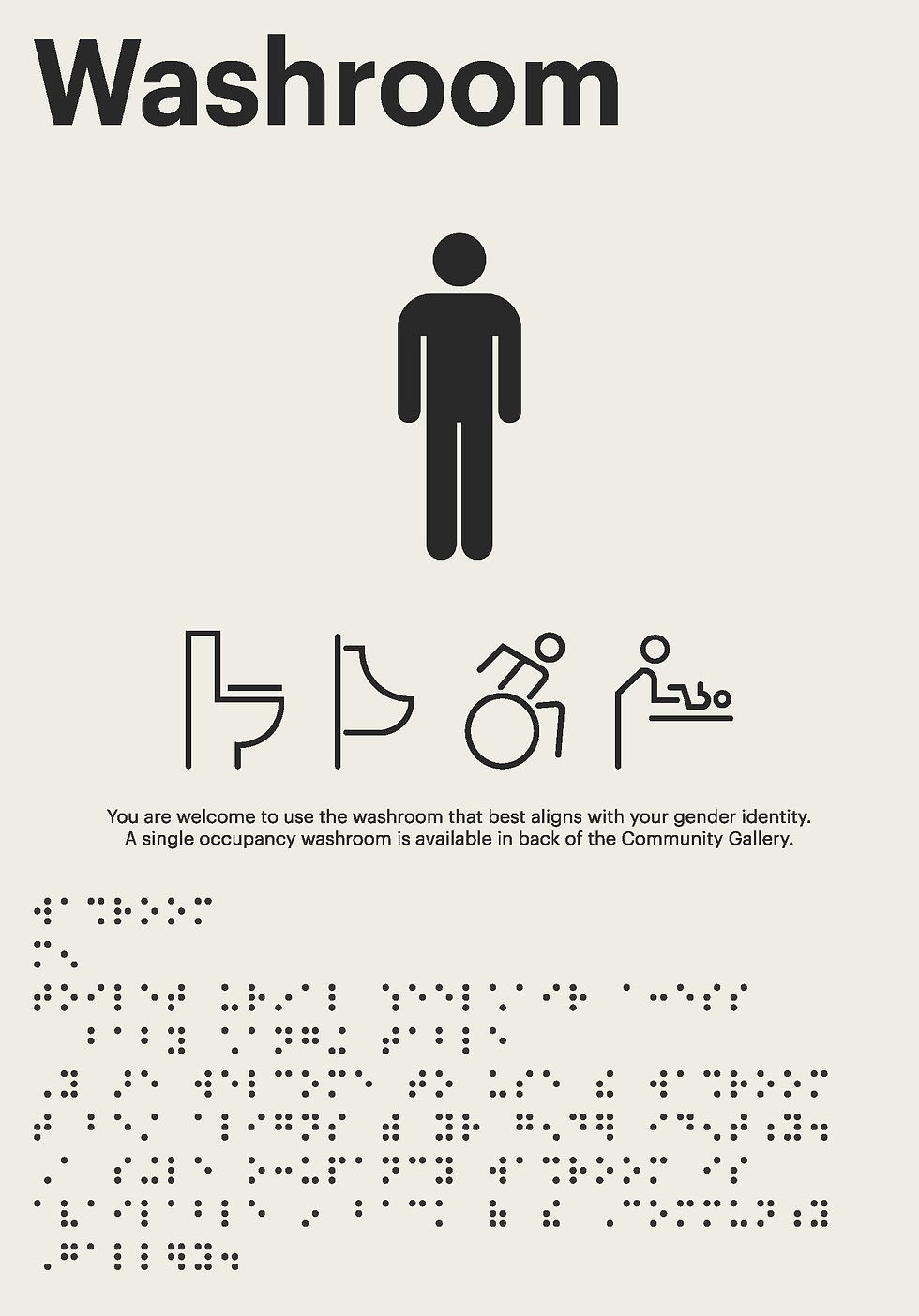
One of the longest-running projects of my time at JMKAC was restroom signage.
What began as signage for the newly opened Art Preserve evolved into a roughly two-year project involving changing organizational requirements, leadership revisions, Facilities, production vendors, Braille research and outside accessibility specialists.
And then I discovered something I hadn't expected.
Some manufacturers selling “Braille signs” weren't translating the room name into Braille at all. The Braille identified the manufacturer.
Which means it's entirely possible there are buildings with beautifully produced “accessible” signs that tell a blind visitor who manufactured the sign instead of where they are.
So I kept researching, learning language conventions, consulting experts, checking standards and working through revisions until we got it right.
That project reinforced something I've believed throughout my career:
Details matter most when the people relying on them have no choice but to trust you got them right.

From complex art to silk-screen ready.
Another project that came up every year was the T-shirt for the Midsummer Festival of the Arts.
Each year, we’d select a key artist who would be at the festival and one of their pieces, and use it as the foundation for the festival’s marketing designs. The art reproduced easily for most print projects. The T-shirt was a different challenge.
In silk-screening, every additional color makes printing exponentially harder. Our vendor recommended limiting the design to four or five colors, so I broke the art down into color sections that could actually be printed.
But a full-color image reduced to four or five colors can look incredibly flat. So I got creative. I built patterned sections and specified which ink to screen first, so the patterns overlapped and created the illusion of additional colors. The artist’s work didn’t change. What changed was how it was built to be printed.
05 • LOOKING BACK
Whichever one fills the biggest gap.
The answer I gave in my interview turned out to be a pretty accurate description of how I worked at JMKAC.
I learned how the organization worked. I learned what different departments needed from marketing. And when I found something creating unnecessary friction—or something that simply needed another set of hands—I tried to make it better.
Sometimes that meant a new workflow.
Sometimes it meant a better numbering system.
Sometimes it meant a Braille sign that finally said the right thing.
Sometimes it meant a paper diorama that helped an idea become real.
And sometimes it meant making sure one more project got across the finish line when there was zero room for it to drop.
Across hundreds of projects and virtually every department in the organization, my contribution was remarkably consistent:
Find the gap. Fill the gap. Leave the team with more capacity than it had before.


Creative Contributions
Design & Creative
• Print collateral
• Print & digital advertising
• Event graphics
• Signage & wayfinding
• Visitor & exhibition materials
• Donor & membership materials
• Promotional products & SWAG
• Apparel
Results
• Coordinated 500+ projects annually while contributing hands-on creative across the organization.
• Helped expand and improve festival signage and wayfinding.
• Developed production systems and tools that continued to be used after my departure.
• Became a primary liaison between the creative team and printers, fabricators, promotional-product suppliers and other production partners.
Creative Production
• Print & production management
• Vendor sourcing & coordination
• Sign fabrication
• Promotional product production
• Prepress & produciton files
• Media purchase, production, placement
• Installation planning